Medicare Crosswalk Explained: How to Read Your Plan's Change Letter

Each fall, people with a Medicare Advantage or Part D prescription drug plan receive an important letter from their plan. It explains how the plan will change for the coming year. This letter is sometimes called the Annual Notice of Change, and the process of moving your information from this year's plan to next year's version is often called a crosswalk.
Understanding this letter helps you decide whether to keep your plan or look at other options.
What is a Medicare crosswalk?
When a plan continues into the next year, the insurance company typically moves (or crosswalks) current members into the following year's version of the plan. You usually do not need to do anything to stay enrolled. However, the new version of the plan may not be identical to the one you have now.
Costs, benefits, provider networks, and drug coverage can change from year to year. That is why the plan is required to tell you what is changing.
What the letter tells you
The Annual Notice of Change letter generally arrives in the fall and describes differences between your current plan and next year's plan. Depending on the plan, it may cover:
- Monthly premium changes
- Deductible, copay, and coinsurance changes
- Changes to the provider or pharmacy network
- Changes to the prescription drug list (formulary)
- Added, reduced, or removed extra benefits
- Changes to the out-of-pocket maximum
What to compare
Before deciding to keep your plan, it can help to review a few key areas:
- Your doctors and hospitals. Confirm they are expected to be in the network next year.
- Your medications. Check whether your prescriptions remain on the drug list and whether their cost tier changed.
- Your total costs. Look beyond the premium. Copays, deductibles, and the out-of-pocket maximum all affect what you may pay.
- Extra benefits. Dental, vision, hearing, and other extras may change or require different cost sharing.
- Your pharmacy. Preferred pharmacy pricing can change from year to year.
When you can make a change
If the new version of your plan no longer fits your needs, the Annual Enrollment Period (October 15 through December 7) is the main time to switch plans for the following year. Other enrollment periods may apply in certain situations.
Do not assume next year's plan is the same
Even when a plan keeps the same name, its details may differ. Reading the change letter carefully, and comparing it with your current costs and providers, is one of the most useful steps you can take each fall.
Want help reviewing your letter?
If you would like a plain-language review of your plan's changes, you can request a Medicare review. There is no cost or obligation for a review.
This content is for general educational purposes and is not a guarantee of eligibility, benefits, rates, or plan availability. Options vary by location and individual circumstances.
Still have questions?
Book a free, no-pressure review and we'll walk through your options together.
Book a Free ReviewRelated articles
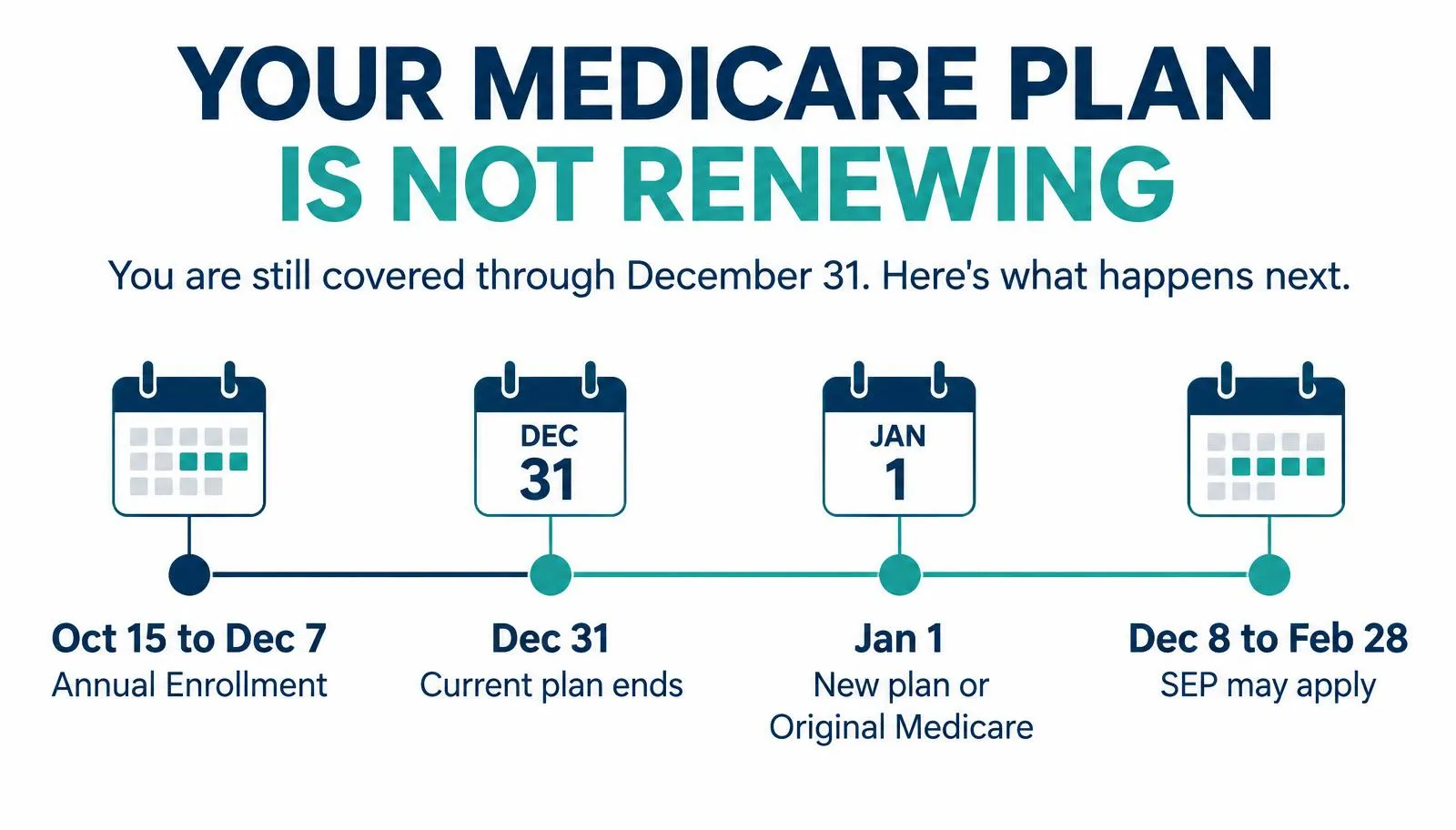
Medicare Plan Not Renewing for 2027? What Happens Next
Got a non-renewal notice? Your current plan generally continues through December 31, 2026. Here is what happens next and which dates matter.
Read: Medicare Plan Not Renewing for 2027? What Happens Next
Medicare Advantage vs. Medicare Supplement
Medicare Advantage and Medicare Supplement take different approaches to cost and provider access. Compare the main tradeoffs before you choose.
Read: Medicare Advantage vs. Medicare Supplement