Medicare Advantage vs. Medicare Supplement

Medicare Advantage and Medicare Supplement are not two versions of the same product. They work in different ways.
Medicare Advantage, also called Part C, is another way to receive Medicare Part A and Part B benefits through a Medicare-approved private plan. Medicare Supplement Insurance, also called Medigap, works alongside Original Medicare to help pay some out-of-pocket costs for Part A- and Part B-covered services.
You cannot use Medigap to pay Medicare Advantage costs. When you are starting Medicare, you generally choose a Medicare Advantage plan or Original Medicare, with the option to add Medigap and a separate Part D drug plan.
How Medicare Advantage works
A Medicare Advantage plan provides Part A and Part B coverage through a private plan approved by Medicare. Most plans include Part D prescription-drug coverage. Some plans offer extra benefits not covered by Original Medicare, but benefits, networks, costs, and rules vary by plan and service area.
You continue to pay the Part B premium, and the plan may charge another premium.
Plans may use provider networks and service areas for non-emergency care.
Some services or supplies may require prior authorization or referrals.
Plans set copayments or coinsurance and include an annual limit on out-of-pocket costs for covered Part A and Part B services.
Drug coverage, formularies, pharmacy networks, and utilization rules can change by plan.
How Medicare Supplement works
Medigap is private insurance that supplements Original Medicare. It can help pay certain deductibles, copayments, and coinsurance for services Original Medicare covers. You must have Part A and Part B to buy a Medigap policy.
In most states, Medigap plans are standardized by letter. Plans with the same letter provide the same basic benefits, but premiums can differ by company, rating method, location, age, and other permitted factors. Massachusetts, Minnesota, and Wisconsin standardize Medigap differently.
You generally can see any provider in the United States who accepts Medicare.
Medigap sold today does not include prescription-drug coverage, so you may need a separate Part D plan.
Medigap premiums are separate from the Part B premium and any Part D premium.
A policy covers one person; spouses need separate policies.
Benefits differ by plan letter, and not every plan is available to every applicant.
Provider choice and travel
Original Medicare generally lets you use any doctor or hospital that takes Medicare. Medigap follows Original Medicare’s provider access because it supplements Original Medicare. Some Medigap plans include limited foreign-travel emergency benefits. Medicare Advantage plans may use HMO, PPO, PFFS, or other network structures. Emergency and urgent care rules differ from routine non-emergency care. A PPO may permit out-of-network care at a higher cost, while an HMO often has tighter network rules. Check your doctors, hospitals, travel patterns, and time spent outside the service area.
Premiums and out-of-pocket costs
Medicare Advantage may trade a lower additional monthly premium for copayments or coinsurance as you use care. Medigap generally adds a monthly premium in exchange for help with certain Original Medicare cost sharing. Neither approach is automatically less expensive for every person.
Compare a full year: premiums, likely service costs, prescription costs, the plan’s out-of-pocket limit, and the financial effect of a high-use year. Benefits and costs can change annually, so review Annual Notice of Change documents.
Prescription drugs
Most Medicare Advantage plans include Part D. If you choose Original Medicare with Medigap, you can enroll in a separate Part D plan. Compare each prescription by name and dose, the formulary tier, preferred pharmacies, deductible, copayment or coinsurance, and rules such as prior authorization.
Enrollment and medical underwriting
Medicare Advantage enrollment and changes are limited to Medicare enrollment periods or eligible special circumstances. Medigap has a separate six-month Open Enrollment Period that begins when you are 65 or older and enrolled in Part B. During that period, federal rules give you certain purchase protections.
After your Medigap Open Enrollment Period, an insurer may use medical underwriting or deny an application unless you have a guaranteed-issue right or stronger protection under state law. Do not leave current coverage until the replacement is approved and you understand the effective date.
Questions to ask before choosing
Do my doctors, hospitals, and pharmacies participate?
How are my prescriptions covered?
What costs would I pay in a routine year and a high-use year?
Do I spend extended time outside the plan’s service area?
Which services require referrals or prior authorization?
Am I within a protected Medigap enrollment period?
What changes can the plan make next year?
Review the choice around your care
The better fit depends on your providers, prescriptions, budget, travel, health needs, service area, and enrollment rights. Dantzler Health Solutions can explain plans the agency is authorized to offer and help you compare those details with official Medicare resources.
For Medicare education, call (570) 539-7597. You can also review all options at Medicare.gov or call 1-800-MEDICARE.
Educational disclaimer
This article is for general educational purposes and is not a guarantee of coverage, eligibility, benefits, premiums, or tax treatment. Product availability and requirements vary by state, carrier, plan, and individual eligibility.
Sources used for fact-checking
Still have questions?
Book a free, no-pressure review and we'll walk through your options together.
Book a Free ReviewRelated articles

Medicare Crosswalk Explained: How to Read Your Plan's Change Letter
Each fall, your Medicare plan sends a letter about next year's changes. Here is how to read it, what to compare, and when to act.
Read: Medicare Crosswalk Explained: How to Read Your Plan's Change Letter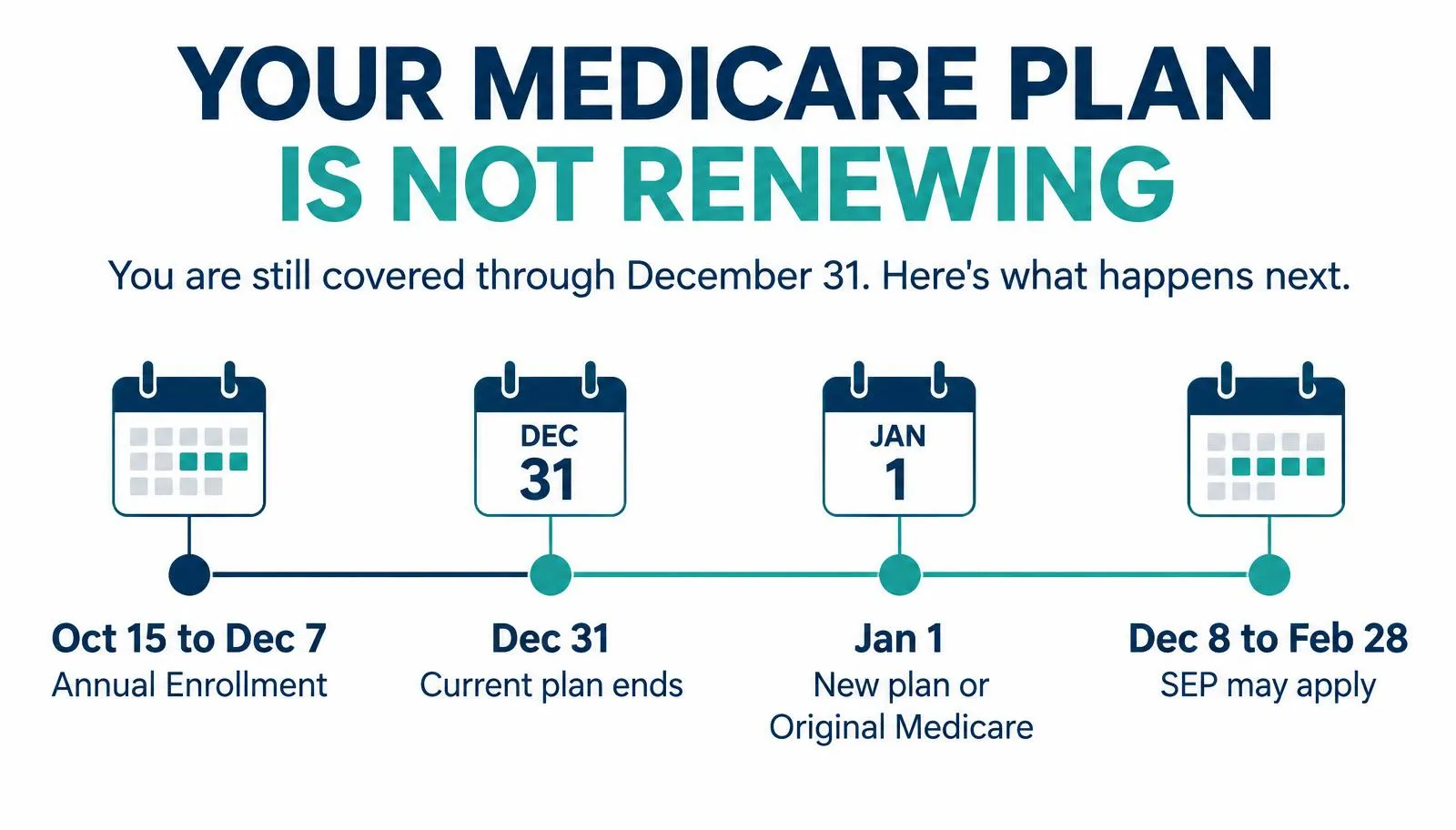
Medicare Plan Not Renewing for 2027? What Happens Next
Got a non-renewal notice? Your current plan generally continues through December 31, 2026. Here is what happens next and which dates matter.
Read: Medicare Plan Not Renewing for 2027? What Happens Next